

“Girls To the Front!”: A Riot Grrrl Retrospective
By Lauren GradyAs economic uncertainty and social unrest brought about the death of disco, a new genre of music began to take its place. A byproduct of 60s and 70s counterculture, punk music was a gritty, stark contrast to the polished and peppy music of the discotheque. Originally dominated by bands such as the Sex Pistols, The Ramones, and The Clash, punk later morphed throughout the 80s and 90s into the post-punk, new wave sound of bands like Joy Division and New Order to the sludgy grunge of Nirvana and Alice in Chains. While these bands undoubtedly defined their respective eras, shaping punk and rock into what it is today, one glaring commonality was shared between them: there were almost no women.
Punk and alternative rock shows were dominated largely by white, heterosexual male audiences and bands. Often exclusionary and aggressive in nature, these shows were unwelcoming to women, LGBTQ+ people, and people of color. Though there were some exceptions, like Siouxsie Sioux and the Banshees, Patti Smith, or The Runaways, most punk artists were white men.
Fed up with the homogeneity of the male punk fanbase, lead singer of Bikini Kill, Kathleen Hanna, and other young women from Olympia, Washington, U.S.A. met in the early 1990s to discuss how they could bring feminism into punk spaces. These meetings birthed the ‘girl zine’, a feminist take on the ‘Do it Yourself’ craftiness of the larger punk genre that published passionate works on misogyny, third-wave feminism, anticapitalism, sexual liberation, and the patriarchy. From these meetings and zines came the term ‘riot grrrl’, a twist on the phrase ‘girl riot’. The ‘Riot Grrrl Manifesto’, a now-infamous piece by Kathleen Hanna published in Bikini Kill Zine 2, served as a catalyst for Riot Grrrl gaining traction outside of Olympia.
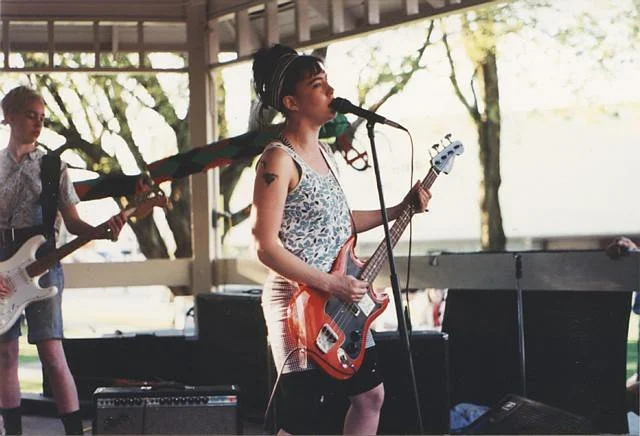
Bikini Kill performing in Olympia Washington in 1991 (Image credit: Jonathan Charles/Wikimedia Commons).
“Doing/reading/seeing/hearing cool things that validate and challenge us can help us gain the strength and sense of community that we need in order to figure out how bullshit like racism, able-bodieism, ageism, speciesism, classism, thinism, sexism, antisemitism and heterosexism figures in our own lives.”
– Kathleen Hanna, ‘Riot Grrrl Manifesto’, Bikini Kill Zine 2 Following the work of Kathleen Hanna and other early Olympia-based pioneers like Bratmobile and Heavens to Betsy, Riot Grrrl ideology spread across the U.S. and U.K., spawning acts such as Emily’s Sassy Lime of Los Angeles, Jack Off Jill of Fort Lauderdale, and Huggy Bear of London. Though Riot Grrrl did not start female punk music (e.g. X-Ray Spex), it did make it more popular than ever before.
Many Riot Grrrl songs follow the standard punk style: fast-pacing, stripped-down instrumentals, and half-sung, half-shouted vocals. However, what makes Riot Grrrl unique is the subject matter of its lyrics. Bold, brash, and crass, Riot Grrrl is unapologetic with its use of expletives and cries of anger over rape, abuse, male exploitation of sex, and capitalism.
“Just cause my world, sweet sister, is so fucking goddamn full of rape, does that mean my body must always be a source of pain?”
– Bikini Kill, “I Like Fucking” 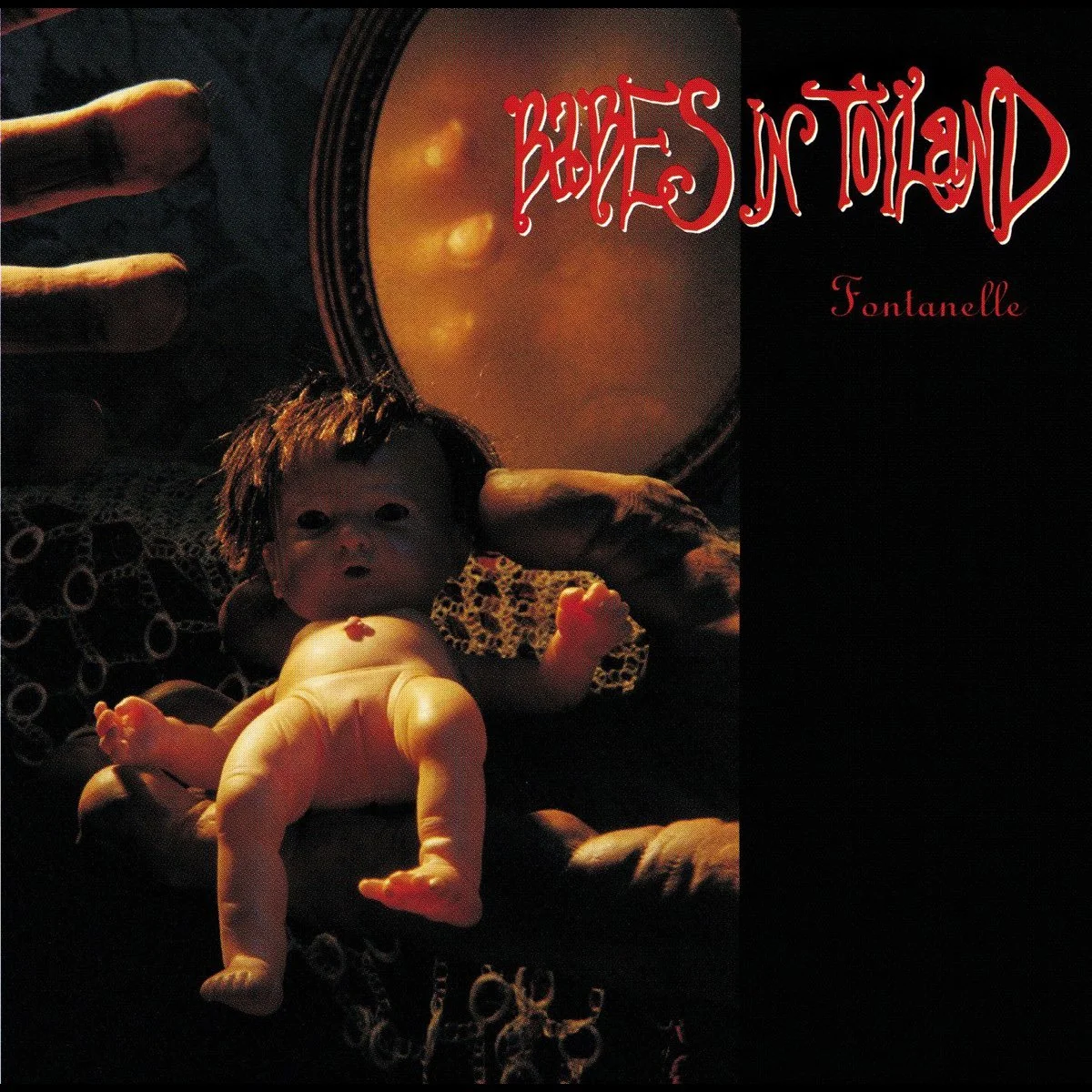
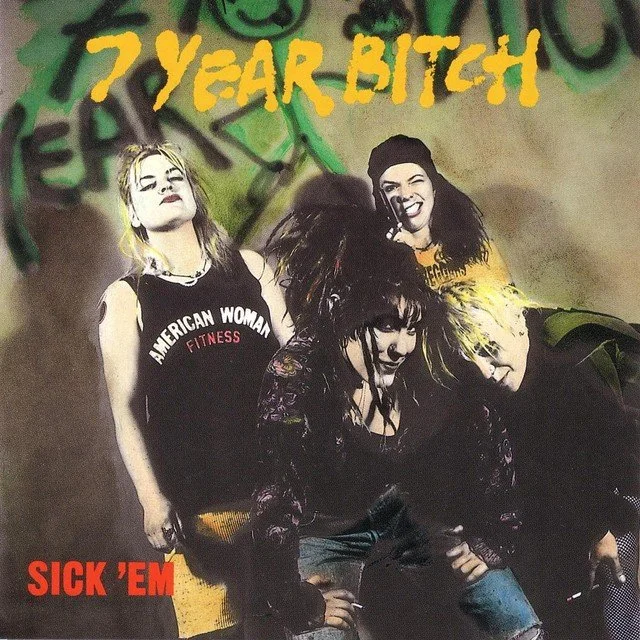
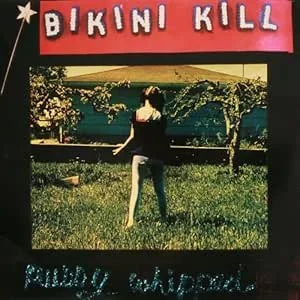
Examples of Riot Grrrl albums from right to left: Pussy Whipped by Bikini Kill, Sick’em by 7 Year Bitch, and Fontanelle by Babes in Toyland.
“You follow me on the fucking street, you make me feel like a piece of meat. You think I don’t know what war means? Now I’m the terrorist, see how it feels. I’m going to kill you.”
– Heavens to Betsy, “Terrorist” ‘Rebel Girl’ off Bikini Kill’s 1993 album Pussy Whipped is often defined as the quintessential Riot Grrrl anthem. Produced and backed by Joan Jett on vocals and guitar, ‘Rebel Girl’ is a declaration of admiration for a woman who rebels against conformity and heteronormativity.
“Rebel girl, you are the queen of my world,” sings Hanna. “Love you like a sister always.”
In singing about her platonic and sexual love for the fabled rebel girl, Hanna promotes female friendship and unity amongst women to fight back against men. Forming a female collective, taking a stand against the patriarchy, and rising above the expectations of men are pertinent themes throughout all Riot Grrrl music. At shows, Hanna and other riot grrrls began shouting ‘girls to the front’ between songs to push men toward the back so that women could enjoy the music. These performances finally provided a space for women in punk and gave women a platform to express themselves unabashedly.
Despite the Riot Grrrl movement’s attempts to make punk more inclusive, punk music was still an overwhelmingly white subculture. Nearly all Riot Grrrl bands of the early 1990s were formed by white women who failed to consider intersectionality in their music and protests. Some names often associated with the movement, such as Courtney Love of Hole, were outwardly racist, yelling racial slurs and berating fans of color at their shows. Even Kathleen Hanna, the famed figurehead of Riot Grrrl, participated in the Michigan Womyn’s Music Festival, an event created by and for women that was later outed for excluding transgender individuals.
It seemed that Riot Grrrl was ending as quickly as it began. By the mid-to-late-1990s, several Riot Grrrl bands were rife with tension. Heavens to Betsy and Huggy Bear split in 1994, Excuse 17 in 1995, and Bikini Kill in 1997 (though it is worth noting that Excuse 17/Heavens to Betsy later became Sleater-Kinney, and Bikini Kill became Le Tigre). The subgenre’s rhetoric had been co-opted by the mainstream, the aesthetic commercialized, and what once was an underground feminist anarchist movement was now a capitalist shell of its former self.
In the latter half of the 1990s and early 2000s, remnants of the Riot Grrrl sound could still be found in bands like Veruca Salt, Elastica, Garbage, and Le Tigre. Some Riot Grrrl bands like Bratmobile had returned from hiatus but were distinctly less riot and more rock. Riot Grrrl, as it was once known, had meshed with more mainstream alternative rock, creating a new sound that, while still bold and intense, lacked the impactful feminist cries of its predecessors.
However, not all Riot Grrrl is dead. Like all music genres, modern Riot Grrrl and feminist punk have taken on new forms while still channeling the messages of their origins. Many Riot Grrrl and Riot Grrrl-adjacent bands today emphasize intersectional feminism and queer identity. Examples of such bands include Destroy Boys, Mannequin Pussy, Cat Crash, Mommy Long Legs, Die Spitz, and Cheap Perfume. Some original riot grrrls like Sleater-Kinney and Kathleen Hanna are still active today, since apologizing for their past ignorance and embracing transgender inclusivity, antiracism, and modern feminism.
In an age of political unrest and a global rise in fascism, protest in art is needed now more than ever. While early riot grrrls laid the foundations of inclusivity for some women, they struggled to make punk inclusive for all. Modern riot grrrls continue to push the boundaries of music, advocating for unity amongst all women and genderqueer individuals, and fighting against anti-abortion, femicide, rape, and oppression. Despite its complicated history and many evolutions, Riot Grrrl is not lost, and will continue to live on as long as there are voices willing to shout for it.